
Smart Polymers: Next-Generation Platforms for Advanced Drug Delivery
DOI:
https://doi.org/10.5530/ajphs.2025.15.87Keywords:
Field-sensitive polymers, Glucose-responsive polymers, Temperature-responsive polymers, pH-responsive polymersAbstract
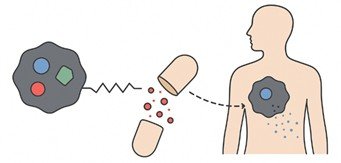
Smart polymers possess significant potential for various applications. Smart polymeric drug delivery systems have been examined as "intelligent" mechanisms capable of releasing encapsulated medications in response to specific physiological signals at the appropriate time and location of action. A slight stimulus induces these polymers to behave nonlinearly, altering their structure and properties on a macroscopic scale. Smart polymers, or stimulus-responsive materials, are a category of substances that can react to particular stimuli by enduring reversible alterations in their properties. Smart polymers possess remarkable characteristics derived from their adaptability and reactivity. Researchers must determine the optimal applications of smart polymers across several domains, as these materials respond to diverse stimuli, including temperature, pH, electric and magnetic fields, light intensity, and biological molecules. Smart polymers have potential applications in gene therapy, protein folding, actuator stimulation, tailored medication administration, and enhanced drug transport.
References
Aundhia, C., Parmar, G., Talele, C., Kardani, S., & Maheshwari, R. (2024). Light-responsive polymers: Developments in drug delivery systems. Current Organic Chemistry, 28(15), 1179-1189. doi: https://doi.org/10.2174/0113852728307241240430055059
Balcerak-Woźniak, A., Dzwonkowska-Zarzycka, M., & Kabatc-Borcz, J. (2024). A comprehensive review of stimuli-responsive smart polymer materials—recent advances and future perspectives. Materials, 17(17), 4255. https://doi.org/10.3390/ma17174255
Bejarano, J., Navarro-Marquez, M., Morales-Zavala, F., Morales, J. O., Garcia-Carvajal, I., Araya-Fuentes, E. & Kogan, M. J. (2018). Nanoparticles for diagnosis and therapy of atherosclerosis and myocardial infarction: evolution toward prospective theranostic approaches. Theranostics, 8(17), 4710-4732. https://doi.org/10.7150/thno.26284
Bharti, D., Banerjee, I., Sarkar, P., Kim, D., & Pal, K. (2023). Smart polymers for biomedical applications. In Advances in Biomedical Polymers and Composites (pp. 223-246). Elsevier. https://doi.org/10.1016/B978-0-323-88524-9.00010-3
Bikram, M., & West, J. L. (2008). Thermo-responsive systems for controlled drug delivery. Expert Opinion on Drug Delivery, 5(10), 1077-1091. https://doi.org/10.1517/17425247.5.10.1077
Fattah-alhosseini, A., Chaharmahali, R., Alizad, S., Kaseem, M., & Dikici, B. (2024). A review of smart polymeric materials: Recent developments and prospects for medicine applications. Hybrid Advances, 5, 100178. https://doi.org/10.1016/j.hybadv.2024.100178
Ferji, K. (2025). Basic concepts and tools of artificial intelligence in polymer science. Polymer Chemistry, 16(21), 2457-2470. https://doi.org/10.1039/D5PY00148J
Gao, L., Lin, J., Wang, L., & Du, L. (2024). Machine learning-assisted design of advanced polymeric materials. Accounts of Materials Research, 5(5), 571-584. https://doi.org/10.1021/accountsmr.3c00288
Givarian, M., Moztarzadeh, F., Ghaffari, M., Bahmanpour, A., Mollazadeh-Bajestani, M., Mokhtari-Dizaji, M., & Mehradnia, F. (2024). Dual-trigger release of berberine chloride from the gelatin/perfluorohexane core-shell structure. Bulletin of the National Research Centre, 48(1), 65. https://doi.org/10.1186/s42269-024-01220-3
Gupta, P., Vermani, K., & Garg, S. (2002). Hydrogels: from controlled release to pH-responsive drug delivery. Drug Discovery Today, 7(10), 569-579. https://doi.org/10.1016/S1359-6446(02)02255-9
Hamzy, I. A., Alqhoson, A. I., Aljarbou, A. M., & Alhajri, M. A. (2024). Advancements in intelligent drug delivery systems and their clinical applications. International Journal of Health Sciences, 1(S1), 1-27. https://doi.org/10.53730/ijhs.v1nS1.15092
Handa, M., Singh, A., Flora, S. J. S., & Shukla, R. (2022). Stimuli-responsive polymeric nanosystems for therapeutic applications. Current Pharmaceutical Design, 28(11), 910-921. https://doi.org/10.2174/1381612827666211208150210
Hoare, T. R., & Kohane, D. S. (2008). Hydrogels in drug delivery: Progress and challenges. Polymer, 49(8), 1993-2007. https://doi.org/10.1016/j.polymer.2008.01.027
Hosseini, M., Farjadian, F., & Makhlouf, A. S. H. (2016). Smart stimuli-responsive nano-sized hosts for drug delivery. In Industrial applications for intelligent polymers and coatings (pp. 1-26). Cham: Springer International Publishing. https://doi.org/10.1007/978-3-319-26893-4_1
Hunter, A. C., & Moghimi, S. M. (2017). Smart polymers in drug delivery: A biological perspective. Polymer chemistry, 8(1), 41-51.https://doi.org/10.1039/C6PY00676K
Jamirad, G., Seif, M., & Montazeri, A. (2025). Fine-tuning hydrophilic–hydrophobic balance in stimuli-responsive PEG-PNIPAM micelles for controlled drug delivery. Journal of Molecular Liquids, 436, 128239. https://doi.org/10.1016/j.molliq.2025.128239
Khalil, A. K., Teow, Y. H., Takriff, M. S., Ahmad, A. L., & Atieh, M. A. (2025). Recent developments in stimuli-responsive polymer for emerging applications: A review. Results in Engineering, 25, 103900. https://doi.org/10.1016/j.rineng.2024.103900
Khan, M. I., Hossain, M. I., Hossain, M. K., Rubel, M. H. K., Hossain, K. M., Mahfuz, A. M. U. B., & Anik, M. I. (2022). Recent progress in nanostructured smart drug delivery systems for cancer therapy: a review. ACS Applied Bio Materials, 5(3), 971-1012.https://doi.org/10.1021/acsabm.2c00002
Krug, S. M., Hayaishi, T., Iguchi, D., Watari, A., Takahashi, A., Fromm, M. & Kondoh, M. (2017). Angubindin-1, a novel paracellular absorption enhancer acting at the tricellular tight junction. Journal of Controlled Release, 260, 1-11. https://doi.org/10.1016/j.jconrel.2017.05.024
Long, T., Pang, Q., Deng, Y., Pang, X., Zhang, Y., Yang, R., & Zhou, C. (2025). Recent Progress of Artificial Intelligence Application in Polymer Materials. Polymers, 17(12), 1667. https://doi.org/10.3390/polym17121667
Mann, R.A., Hossen, M.E., McGuire Withrow, A.D., Burton, J.T., Blythe, S.M. & Evett, C.G. (2024). Mesoporous silica nanoparticles-based smart nanocarriers for targeted drug delivery in colorectal cancer therapy, arXiv, 2409.18809. https://doi.org/10.48550/arXiv.2409.18809
Noro, A., Leonardi, B., Natale, G., Bove, M., Martone, M., Pica, D. G. & Fiorelli, A. (2023). Smart biomaterials and constructs for cardiac tissue regeneration. In New Trends in Smart Nanostructured Biomaterials in Health Sciences (pp. 259-276). Elsevier. https://doi.org/10.1016/B978-0-323-85671-3.00013-0
Rahim, M. A., Jan, N., Khan, S., Shah, H., Madni, A., Khan, A. & Thu, H. E. (2021). Recent advancements in stimuli responsive drug delivery platforms for active and passive cancer targeting. Cancers, 13(4), 670. https://doi.org/10.3390/cancers13040670
Rajora, A. K., Ahire, E. D., Rajora, M., Singh, S., Bhattacharya, J., & Zhang, H. (2024). Emergence and impact of theranostic‐nanoformulation of triple therapeutics for combination cancer therapy. Smart Medicine, 3(1), e20230035. https://doi.org/10.1002/SMMD.20230035
Sajjad, R., Chauhdary, S. T., Anwar, M. T., Zahid, A., Khosa, A. A., Imran, M., & Sajjad, M. H. (2024). A review of 4D printing–technologies, shape shifting, smart polymer based materials, and biomedical applications. Advanced Industrial and Engineering Polymer Research, 7(1), 20-36. https://doi.org/10.1016/j.aiepr.2023.08.002
Shi, Z., Li, Q., & Mei, L. (2020). pH-Sensitive nanoscale materials as robust drug delivery systems for cancer therapy. Chinese Chemical Letters, 31(6), 1345-1356. https://doi.org/10.1016/j.cclet.2020.03.001
Singh, J., & Nayak, P. (2023). pH‐responsive polymers for drug delivery: trends and opportunities. Journal of Polymer Science, 61(22), 2828-2850. https://doi.org/10.1002/pol.20230403
Singh, J., Gupta, D., Yadav, A. K., & Singh, A. D. (2025). Smart Polymers in Controlled Drug Release: Mechanisms and Clinical Applications. Journal of Drug Discovery and Health Sciences, 2(02), 100-106. https://doi.org/10.21590/jddhs.02.02.06
Sobczak, M. (2022). Enzyme-responsive hydrogels as potential drug delivery systems-state of knowledge and future prospects. International Journal of Molecular Sciences, 23(8), 4421. https://doi.org/10.3390/ijms23084421
Tran, H., Gurnani, R., Kim, C., Pilania, G., Kwon, H. K., Lively, R. P., & Ramprasad, R. (2024). Design of functional and sustainable polymers assisted by artificial intelligence. Nature Reviews Materials, 9(12), 866-886. https://doi.org/10.1038/s41578-024-00708-8
Xia, Y., Ma, Z., Wu, X., Wei, H., Zhang, H., Li, G. & Zhu, M. (2024). Advances in stimuli‐responsive chitosan hydrogels for drug delivery systems. Macromolecular Bioscience, 24(5), 2300399. https://doi.org/10.1002/mabi.202300399
Xu, Z., Croft, Z. L., Guo, D., Cao, K., & Liu, G. (2021). Recent development of polyimides: Synthesis, processing, and application in gas separation. Journal of Polymer Science, 59(11), 943-962. https://doi.org/10.1002/pol.20210001
Zhou, Z., Zhang, F., Li, X., Zhang, Y., Xie, X., Liu, Q., ... & Ye, M. (2025). A general nanoplatform for nucleotide drug delivery: From molecular binding to antiviral therapy. Journal of Controlled Release, 387, 114245. https://doi.org/10.1016/j.jconrel.2025.114245
Ziegler, R., Ilyas, S., Mathur, S., Goya, G. F., & Fuentes-García, J. A. (2024). Remote-controlled activation of the release through drug-loaded magnetic electrospun fibers. Fibers, 12(6), 48. https://doi.org/10.3390/fib12060048